

Digital Marketing Bristol: A Practical Guide to Generating Better Leads
If you want digital marketing in Bristol to produce more than website visits, start by joining your local visibility, paid media, content, website experience and measurement around one commercial goal. This guide shows you how to build that system, test it and improve it.
At Flex Digital, we work with Bristol businesses that need more qualified enquiries, stronger online sales or a clearer route from marketing spend to revenue. The most effective approach is rarely a single channel. It is a focused plan that uses the right channel at the right point in the customer journey.
Table of contents
- Before you start: define the inputs
- 1. Set a commercial target and map the buying journey
- 2. Build local search visibility where customers are looking
- 3. Use PPC to capture urgent, high-intent demand
- 4. Create content that answers the questions blocking a sale
- 5. Turn attention into enquiries with a conversion-ready website
- 6. Measure revenue signals, then improve the mix
- The outcome: a Bristol marketing system built to learn and grow
Before you start: define the inputs
Before beginning, make sure you have:
- One primary business goal, such as booked surveys, quote requests, showroom visits or online sales.
- A clear picture of your best customers, their locations and the services or products they buy.
- Access to your website, Google Business Profile, analytics and advertising accounts.
- A way to follow leads through to sale, whether that is a CRM such as HubSpot, a spreadsheet or a sales pipeline.
- A realistic test budget and a named person who can approve copy, landing pages and campaign changes.
For a Bristol construction or home improvement company, a useful starting goal could be 15 qualified enquiries a month for kitchen extensions in Bristol and nearby postcodes. It is specific enough to guide keyword research, ad targeting, website copy and reporting.
1. Set a commercial target and map the buying journey
Action: Turn a broad ambition such as “get more leads” into a measurable target. Define the service, location, audience, lead action, lead quality rule and expected value of a sale. Then list the main questions a potential customer asks before getting in touch.
For example, a roofing company may target “qualified roof repair enquiries from Bristol within a 20-mile service area”. Its prospects may first search for emergency help, then compare providers, read reviews and finally request a survey.
Expected result: You have a one-page brief that tells every channel what success looks like. It should include a baseline, a target, a timeframe and an owner.
Verification check: Ask your sales team whether they could identify a good lead from the brief alone. If they cannot, refine the lead definition before launching campaigns.
Troubleshooting: Do not optimise for form fills if many are irrelevant. Add quality checks, such as service type, postcode, project budget or confirmed appointments, and report on them.
2. Build local search visibility where customers are looking
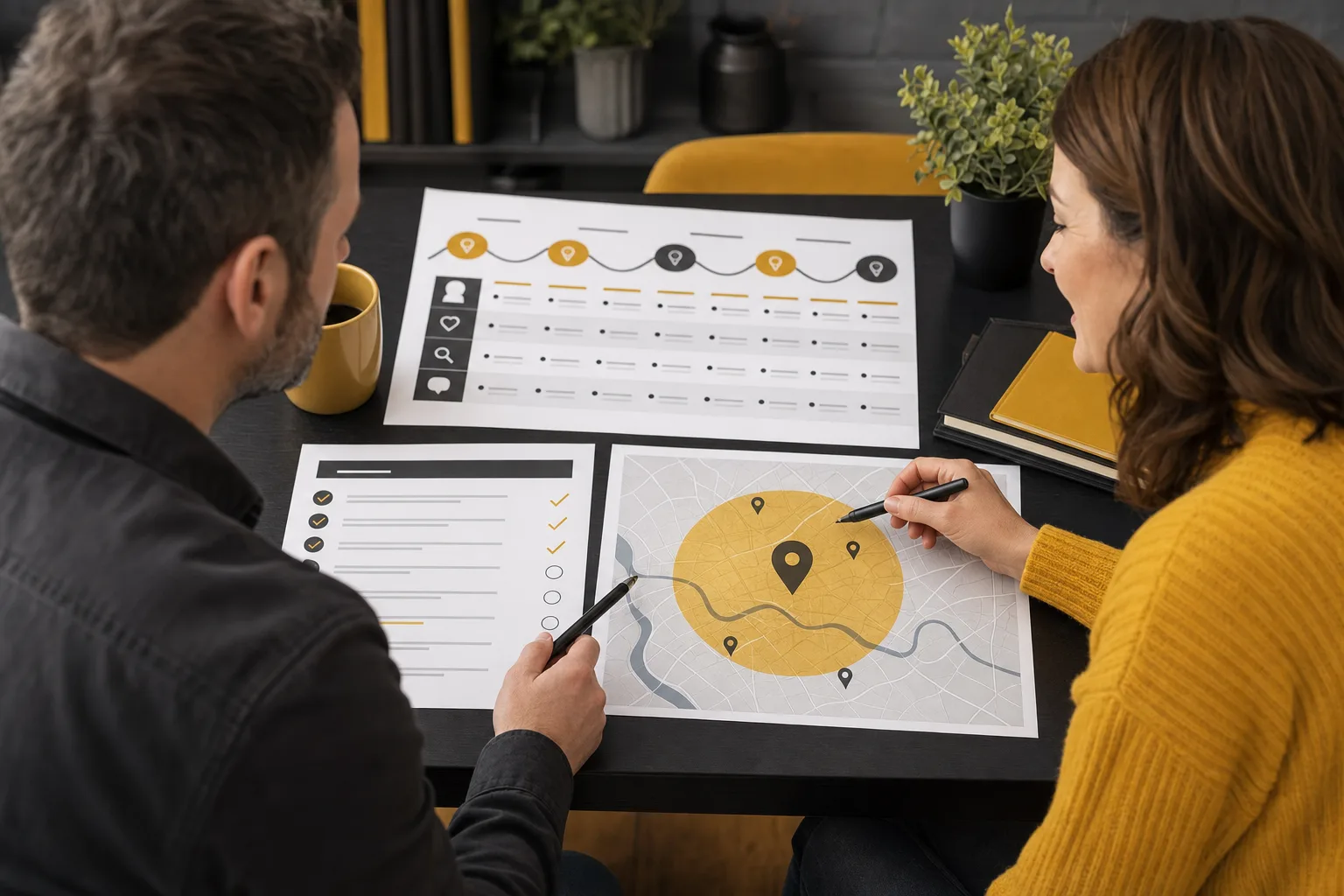
Action: Make local search a core part of your digital marketing plan. Complete and maintain your Google Business Profile with accurate categories, service details, contact information, opening hours, imagery and review responses. Build location-relevant pages on your website only where you have a genuine service offering and useful local information.
Google explains that local results are influenced primarily by relevance, distance and prominence. Complete business information and genuine customer reviews can therefore support local discovery, but no agency can buy a better local ranking.
For organic visibility beyond the map results, develop a structured SEO strategy for Bristol that covers technical health, service pages, helpful content, local intent and ethical link building. For example, an insulation installer could create clear pages for loft insulation, wall insulation and surveys, then support them with practical guides that answer common homeowner questions.
Expected result: Search engines and prospective customers can quickly understand what you offer, where you operate and why they should contact you.
Verification check: Search from a logged-out browser for your core service plus Bristol. Check that your business details are consistent across your site and Google Business Profile, and that every key service has a useful page.
Troubleshooting: Avoid thin, near-identical pages for every Bristol suburb. Consolidate weak pages and add evidence that helps a visitor choose you, such as project examples, qualifications, process explanations and FAQs.
3. Use PPC to capture urgent, high-intent demand
Action: Use paid search when you need to test demand quickly or appear for high-value searches while SEO is developing. Separate campaigns by service, location and intent. Send each ad group to a landing page that matches the search, explains the offer and makes the next step easy.
A focused PPC campaign can be useful for terms such as “builder Bristol”, “commercial roofing contractor” or “replacement windows Bristol”, provided the landing page, targeting and follow-up process are ready. We recommend building your account around qualified conversions, not simply clicks. Google Ads conversion tracking can measure valuable actions such as purchases, enquiries, calls and downloads.
Our Bristol PPC services can include paid search, display and video activity, shopping ads, remarketing, Microsoft Ads and paid social, depending on the commercial objective. Start with the channel closest to the buying decision before adding broader awareness activity.
Expected result: You receive fast evidence about which services, messages and locations produce qualified interest.
Verification check: Test every form, telephone link and thank-you page yourself. Confirm that Google Ads and GA4 record the correct lead event, and that the lead reaches the person responsible for follow-up.
Troubleshooting: If clicks are arriving but leads are weak, tighten location targeting, add negative keywords, review search terms and make the landing page clearer about price range, service scope or eligibility.

4. Create content that answers the questions blocking a sale
Action: Plan content around real customer questions at every stage of the journey. Use service pages for direct purchase intent, articles for research questions, case studies for proof and email for follow-up. Each piece should have a clear audience, purpose, primary action and internal link to the next useful page.
For a home improvement business, a useful content plan might include “How much does a loft conversion cost in Bristol?”, “Do I need planning permission for an extension?” and a case study showing how a completed project moved from survey to handover. This approach gives prospects useful information while strengthening topical relevance for search.
Our content marketing services in Bristol combine strategy, blogs, website copy, whitepapers, email and visual content. Consistency matters more than publishing a large volume of generic articles. A manageable monthly schedule that reflects real expertise is a stronger starting point.
Expected result: Your marketing gives people a reason to trust you before they are ready to speak to sales.
Verification check: Review the last three pieces of content. Can each one answer a specific customer question, demonstrate expertise and guide the reader to a relevant next step?
Troubleshooting: If a blog earns traffic but no enquiries, add a relevant call to action, stronger internal links, a downloadable checklist or a practical consultation offer. Do not force every article to sell immediately.
5. Turn attention into enquiries with a conversion-ready website
Action: Review the pages that receive the most paid and organic traffic. Make the value proposition clear near the top, show relevant proof, reduce unnecessary form fields and make it easy to call, enquire or book. Mobile usability is essential because local and urgent searches often happen on a phone.
Your website should support, not obstruct, the marketing channels sending traffic to it. A conversion-focused Bristol web development project can bring user-centred design, SEO foundations, analytics and integrations together from the outset.
Useful tools may include GA4, Google Tag Manager, Search Console, a CRM such as HubSpot and call tracking. The exact stack matters less than having a reliable way to connect a lead back to the source, campaign and service that generated it.
Expected result: More of the people who land on your site take a meaningful next step, and your team can explain why.
Verification check: On a mobile phone, complete your primary conversion in under two minutes. Check that confirmation messaging works, the lead is delivered and the event appears in your reporting.
Troubleshooting: If visitors leave quickly, check page speed, message match between ad and landing page, intrusive pop-ups, unclear pricing cues and missing trust signals. Change one important element at a time so you can learn from the result.
6. Measure revenue signals, then improve the mix
Action: Create a simple weekly dashboard that tracks traffic, leads, qualified leads, conversion rate, cost per qualified lead, sales value and return on investment. Review results by channel, service and location. Pair the numbers with feedback from the sales team, because analytics cannot explain whether a lead was a good commercial fit.
Set up separate conversion actions for the outcomes that matter, such as enquiry forms, phone calls, booked consultations and completed purchases. Google recommends choosing the conversions you want to measure and reporting on the actions that are valuable to the business.
Use the findings to make a prioritised change list. You may decide to increase PPC spend on a profitable service, refresh an underperforming service page, publish content for a recurring sales question or improve the follow-up time for new enquiries.
Expected result: Marketing decisions are based on evidence and commercial outcomes rather than channel vanity metrics.
Verification check: At the end of each month, reconcile leads in analytics with leads in your CRM or sales records. Investigate any major gap before changing budgets.
Troubleshooting: If reporting is inconsistent, audit your tracking setup before drawing conclusions. Check consent implementation, duplicate tags, form events, call tracking and CRM source fields.
The outcome: a Bristol marketing system built to learn and grow
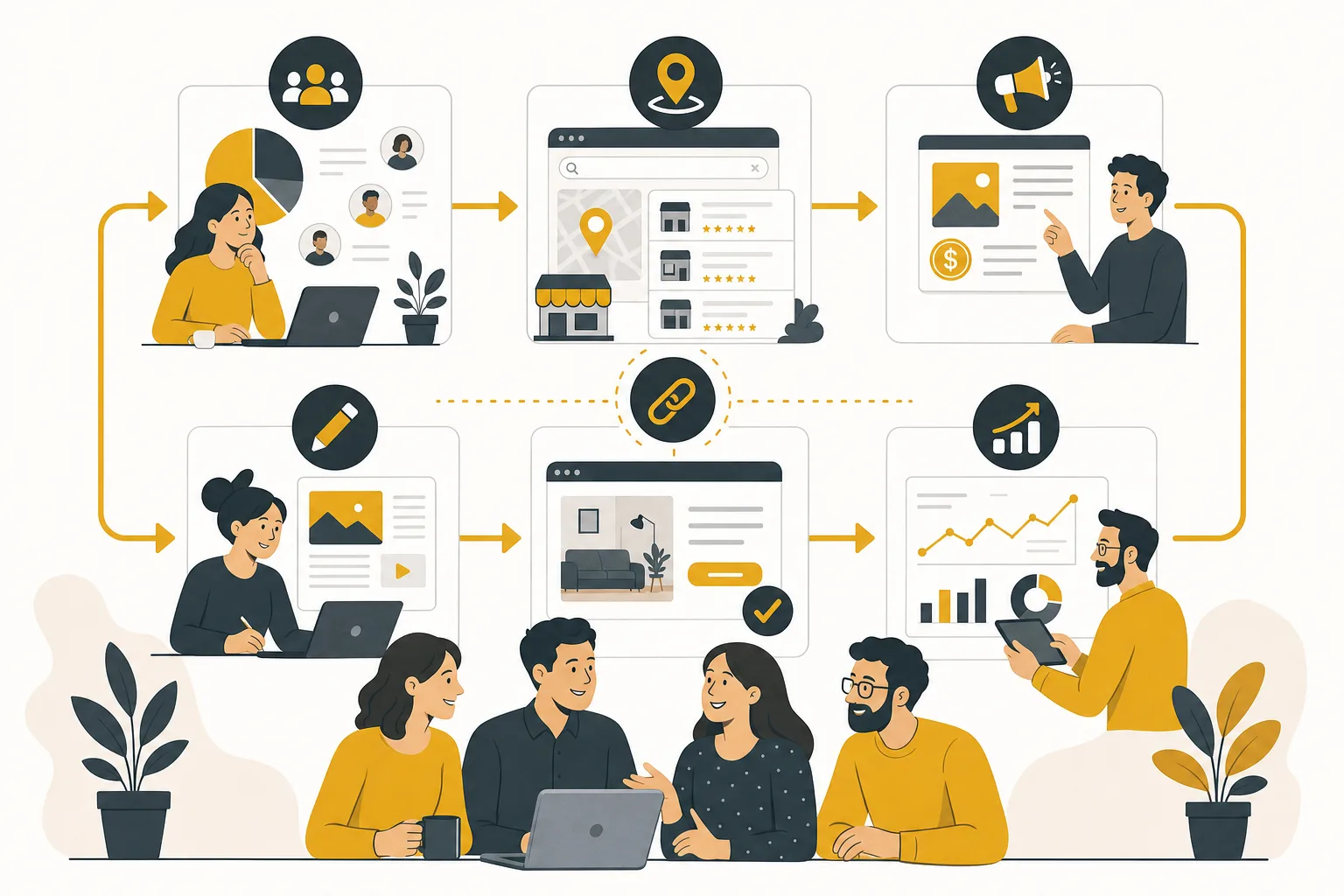
By following these steps, you will have a digital marketing system that is locally relevant, measurable and aligned with how customers choose a provider. SEO builds durable visibility, PPC captures demand, content earns trust, a strong website improves conversion and reliable tracking tells you what to do next.
If you want an experienced Bristol team to audit the gaps and prioritise the fastest opportunities, book a discovery call with Flex Digital. We will help you build a flexible, integrated plan around your goals, audience and capacity.