

Construction Lead Generation: A Step-by-Step Guide to Winning Better Enquiries
Construction lead generation works best when we connect a clear offer, strong local visibility, a focused landing page and disciplined follow-up. Rather than chasing every possible enquiry, we build a system that attracts the jobs your team wants and makes it easy for the right prospects to take the next step.
This guide shows us how to create that system. It is designed for builders, specialist contractors and construction firms serving local, regional or commercial markets.
Table of contents
- What you need before you begin
- 1. Define the jobs and customers you want to win
- 2. Build a dedicated page for each priority service
- 3. Strengthen your local search presence
- 4. Capture high-intent demand with paid search
- 5. Track every meaningful lead action
- 6. Respond quickly and qualify consistently
- 7. Improve the system every week
- The outcome: a construction lead engine you can manage
What you need before you begin
Before launching campaigns or publishing new pages, prepare these essentials:
- A defined service mix, such as extensions, roofing, groundworks, fit-outs or commercial refurbishment.
- A realistic service area, including the towns, postcodes or travel radius you can serve profitably.
- Evidence of quality: project photography, accreditations, testimonials, case studies and warranties where relevant.
- One person or team responsible for answering calls and enquiries promptly.
- A simple CRM, spreadsheet or job-management system that records every lead and outcome.
- A monthly test budget for paid search, if you want leads while organic visibility grows.
The goal is not more form fills at any cost. The goal is a measurable flow of qualified opportunities that your estimating and delivery teams can handle.
1. Define the jobs and customers you want to win
Start by separating the work you want more of from the work you would rather avoid. List your highest-value, best-margin service lines, then describe the customer, location and project trigger for each one.
For example, a residential builder might target “house extension builder in Bristol” and “loft conversion contractor in Bath”. A commercial contractor might focus on office refurbishments for facilities managers within a 40-mile radius. These are different audiences, so they need different messaging, proof and qualification questions.
Action: Create a one-page lead brief for each priority service. Include the service, ideal location, minimum project value, typical decision-maker, common objections and preferred contact method.
Expected result: Your website, adverts and sales team use the same definition of a good lead.
Troubleshooting: If every job type is profitable but your message feels broad, begin with the service that has the clearest proof and shortest route to a quote. Expand only when that campaign produces consistent quality.
2. Build a dedicated page for each priority service
A generic homepage rarely answers every question a construction prospect has. Build a dedicated landing page for each priority service and location cluster. The page should make the offer obvious in the first screen, show relevant projects, explain your process and make the next action simple.
We recommend including:
- A specific headline that combines service and location.
- A short explanation of who the service is for.
- Project images and proof that match the service type.
- A simple outline of scope, process and likely next step.
- Testimonials, certifications and insurance details where appropriate.
- A prominent call button and short enquiry form.
- Qualification fields, such as project location, budget range, timeframe and service required.
A conversion-focused website is the foundation for every channel. Our website development service is built around user-focused design, search visibility and lead generation, while our content marketing service can help turn project knowledge into useful decision-stage content.
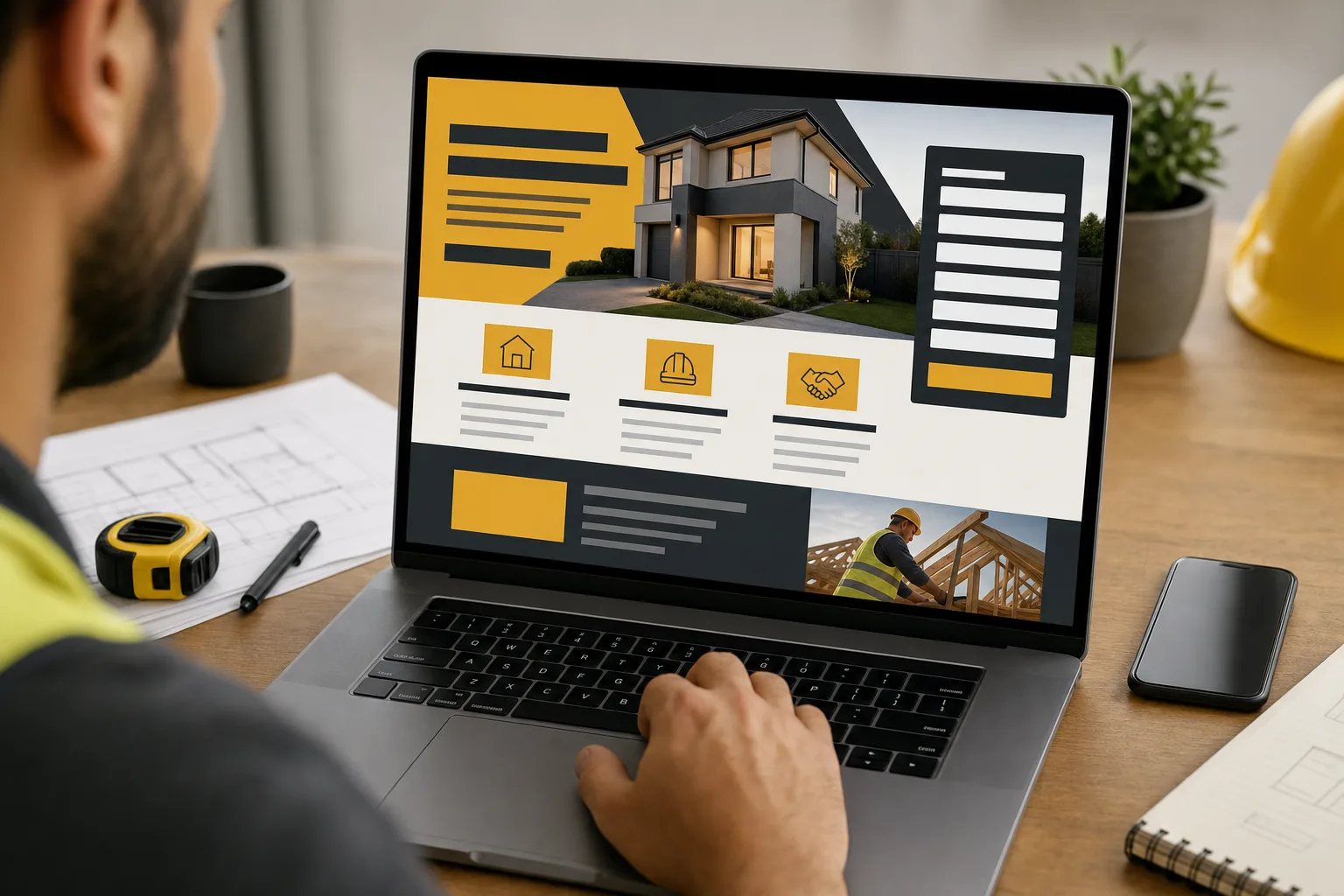
Action: Publish one page for your best service first, then send test traffic from search, paid ads or your existing Google Business Profile.
Expected result: A visitor can understand the service, see proof and request a survey or quote without hunting for information.
Troubleshooting: If visits are arriving but enquiries are weak, reduce the number of form fields, make the call to action more specific and move your most relevant proof higher on the page.
3. Strengthen your local search presence
Construction buyers usually search with a need and a place: “builder near me”, “commercial roofing contractor in [town]” or “kitchen extension company [area]”. Make sure your business information is consistent across your site and local profiles, and that each priority page clearly identifies the locations it serves.
Set up and maintain your Google Business Profile, using accurate contact information, service categories, operating hours, project images and regular updates. Ask for genuine reviews after successful projects, then respond professionally to both positive and critical feedback.
On your website, use place names naturally where they are relevant to your real service area. Add structured business information carefully, validate it and keep it current. Google documents that LocalBusiness structured data can communicate details such as business hours and other business information to Search.
For sustainable visibility, pair service pages with local project case studies and practical advice. Our SEO services can help us plan the technical, on-page and content work needed to grow organic enquiries.
Action: Audit your business name, address, telephone number, website link and opening hours wherever customers can find you. Correct inconsistencies before creating more listings.
Expected result: Prospects encounter matching information, relevant local proof and an obvious route to call or enquire.
Troubleshooting: If you serve several towns, do not publish thin, near-duplicate area pages. Build each page around meaningful local evidence, relevant services or a useful project example.
4. Capture high-intent demand with paid search
Paid search can put us in front of people actively looking for a contractor, especially while SEO work gains traction. Begin with tightly themed campaigns around your highest-priority services, rather than putting every service into one broad ad group.
Use exact and phrase-match keyword themes where appropriate, add negative keywords to block irrelevant searches and direct each ad group to the closest matching landing page. Include the service area in the ad copy when it helps qualify clicks.
Google Ads supports targeting by countries, areas, radii and other location groups. For a construction firm, that means we can align campaigns to the places your team can realistically survey and serve. Review location settings closely because intent and physical presence can differ.
Our PPC services cover paid search, Google and Microsoft Ads, remarketing, conversion tracking and landing-page optimisation. We use the data to improve lead quality, not simply chase clicks.
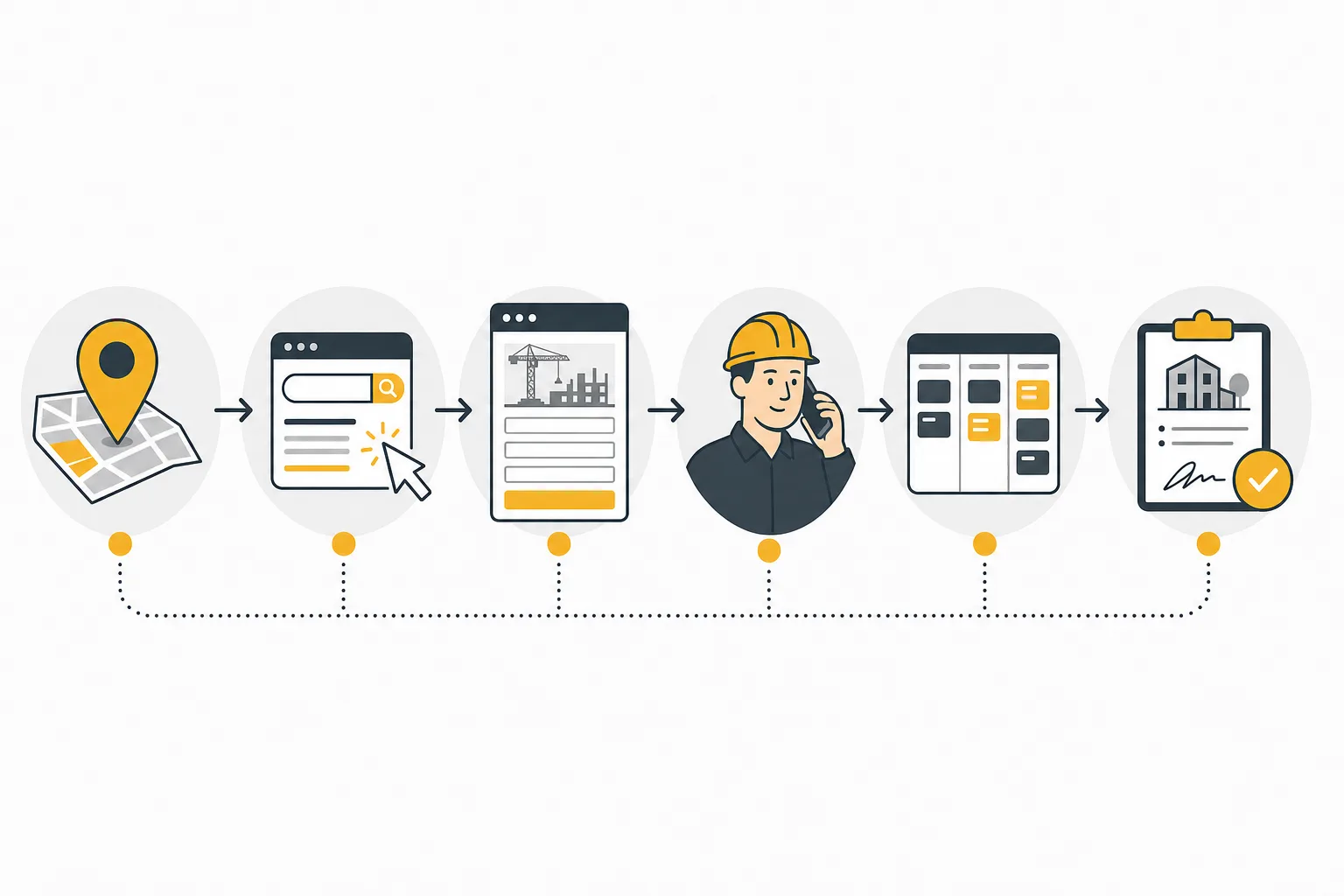
Action: Launch one campaign for one high-value service with a controlled budget, a dedicated landing page and call tracking.
Expected result: You can see which search terms, locations and ads produce calls or forms from potential customers.
Troubleshooting: If spend rises but quote requests are poor, inspect the search terms report, tighten location settings, add negative keywords and make the ad promise match the page exactly.
5. Track every meaningful lead action
Do not optimise for website visits alone. Track the actions that indicate commercial intent: phone calls, submitted quote requests, booked surveys, email enquiries and, where possible, qualified opportunities and won work.
Set up analytics and conversion tracking before increasing ad spend. Give each lead a source, service and location tag in your CRM or job-management tool. When an enquiry becomes a survey, quote or signed contract, update the original lead record. This creates a feedback loop between marketing and sales.
For example, a £30 click that creates a small repair enquiry may be less valuable than a £90 click that produces a profitable extension project. Without outcome data, both can look like a successful conversion.
The video below from Google Ads explains the first part of setting up conversion tracking.
Action: Test every form, call link and thank-you page from a mobile phone and desktop device. Submit a test lead, then confirm it appears in your analytics and CRM.
Expected result: Your reporting connects marketing activity to enquiries and eventually to revenue.
Troubleshooting: If numbers differ between platforms, check for duplicate conversion events, missing consent configuration, form redirects and offline leads that are not being added to the CRM.
6. Respond quickly and qualify consistently
Lead generation does not end when the form is submitted. A fast, helpful first response is part of the conversion process. Agree a clear response standard, such as calling new enquiries during business hours within a defined window, then using a short follow-up sequence if you cannot reach them.
Create a qualification script that asks only what is needed to decide the next step:
- Where is the project?
- What work is required?
- What is the likely budget range?
- When does the customer want to begin?
- Is the caller the decision-maker?
- Are plans, permissions or surveys already available?
Use the answers to book a site visit, request more information, refer an unsuitable lead or add a promising prospect to a follow-up schedule. Keep the experience professional and human. Construction projects involve trust, disruption and significant investment, so prospects need clarity as much as speed.

Action: Review the last 20 enquiries and label each as qualified, unqualified, quoted, won or lost. Identify where leads are slowing down or being lost.
Expected result: Your team sees whether the constraint is traffic, lead quality, response time, estimating capacity or closing.
Troubleshooting: If your team cannot respond promptly, reduce campaign coverage temporarily or use a trained call-handling process. Paying for leads you cannot contact wastes budget and damages trust.
7. Improve the system every week
A reliable construction lead generation programme is built through small, evidenced improvements. Set a weekly review meeting that includes the person managing campaigns and the person speaking to prospects.
Track at least these measures:
- Qualified leads by service and location.
- Cost per qualified lead for paid channels.
- Lead-to-survey and survey-to-quote rates.
- Quote-to-win rate and average project value.
- Response time to new enquiries.
- Search terms, landing pages and locations that produce the strongest opportunities.
Make one or two changes at a time, then allow enough data to judge the result. Test a clearer offer, stronger project proof, a different location radius or a more focused service page. Avoid changing every setting at once, because you will not know what improved performance.
If your team needs help interpreting the data or building in-house capability, our digital marketing training and consultancy can provide practical support alongside campaign management.
Action: Put a 30-minute weekly review in the diary and assign an owner to each agreed improvement.
Expected result: Budget moves toward services, locations and messages that generate the best commercial outcomes.
Troubleshooting: If there is not enough lead volume for meaningful weekly conclusions, review activity weekly but judge larger changes over a longer, agreed period.
The outcome: a construction lead engine you can manage
When these steps are in place, construction lead generation becomes a manageable operating system: the right people find a relevant service page, submit a trackable enquiry, receive a timely response and move through a consistent sales process.
Start with one priority service, one service area and one measurement plan. Once it produces qualified opportunities consistently, we can replicate the approach across other services and locations.
If you want an expert view of where your current lead flow is leaking, book a conversation with Flex Digital. We combine SEO, PPC, content, CRO, website development and analytics into a flexible strategy built around the leads and growth your construction business needs.